Making Glazes, Make Sense by Ceramic Materials Workshop
Making Glazes, Make Sense is a self-paced online glaze chemistry course by Matt Katz of Ceramic Materials Workshop: 16 modules, 80+ hours, optional labs and weekly live Q&A. $700, payment plans available.
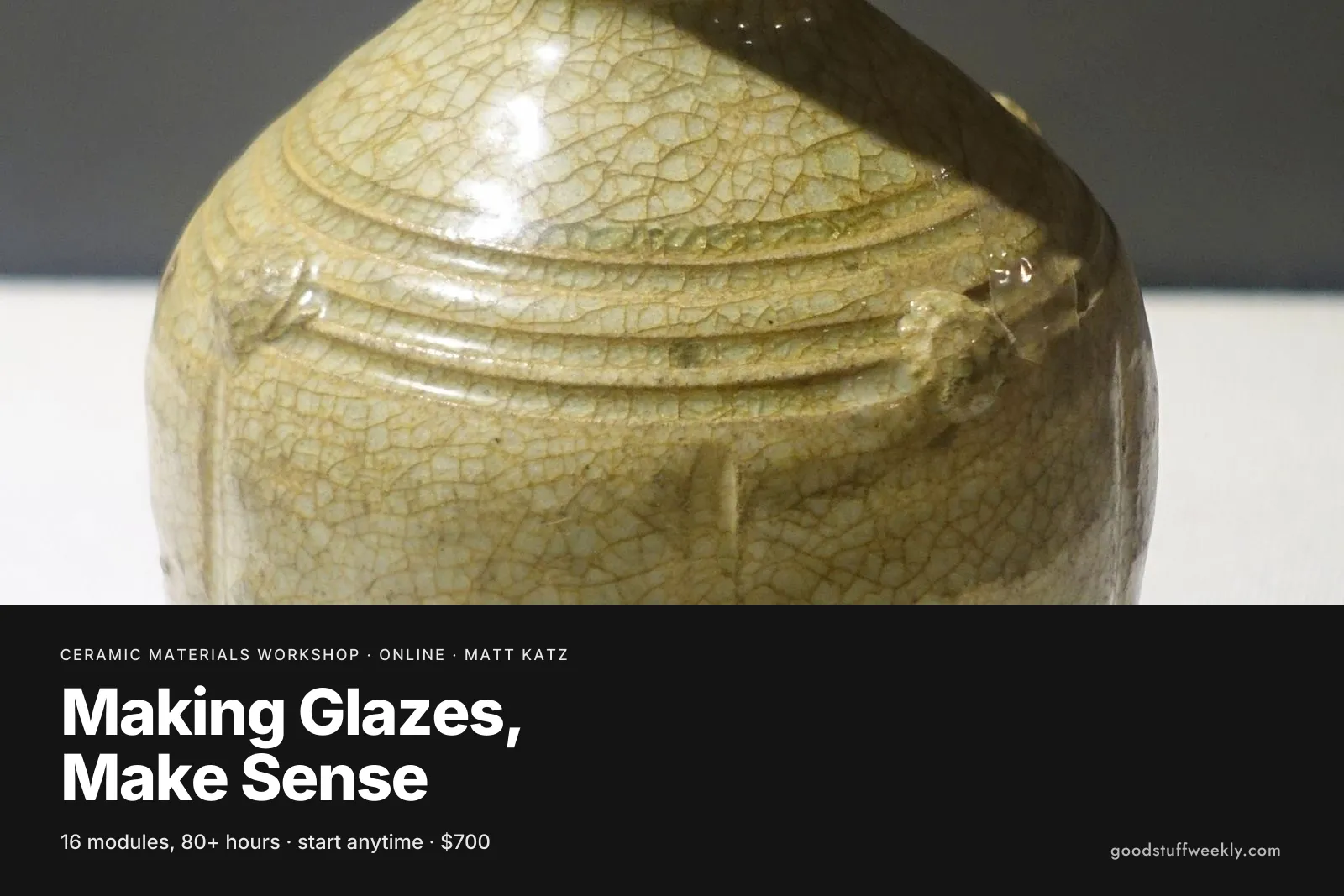
Making Glazes Make Sense is a self-paced online course from Ceramic Materials Workshop, taught by Matt Katz, that explains the science behind ceramic glazes. It runs through 16 modules and more than 80 hours of content, moving from raw materials and molecular structure to colour, formulation, troubleshooting, application and safe handling. Lectures come with optional hands-on lab experiments and a live weekly Q&A. You can start at any time, access is lifetime, and the course costs $700, with a three- or six-month payment plan offered at checkout.
Most potters learn glazes by following recipes and hoping the kiln agrees. This course takes the opposite route: it teaches why a glaze behaves the way it does, so you can formulate your own from scratch and fix problems when they appear. Within the Ceramic Materials Workshop catalogue it is the foundation course for glaze work, and it is required before you can take the follow-on course, Advancing Glazes.
What You Will Learn
The course aims to make glaze chemistry something you can reason about rather than memorise. According to the official page, it covers:
- The raw materials that go into glazes and what each one contributes
- Glaze chemistry down to molecular structure
- How colour develops in a glaze
- Formulating glazes from scratch instead of relying on borrowed recipes
- Troubleshooting common glaze problems
- Applying glazes to work
- Handling ceramic materials safely in the studio
Who Is Making Glazes Make Sense For?
The official page describes the course as suitable for all levels, from beginners to advanced potters. It suits studio potters who mix their own glazes, ceramics students who want the theory behind their kiln results, and teachers or studio technicians who need to answer other people's glaze questions.
It is a big commitment, though. If you only want a handful of reliable recipes for a hobby, a shorter workshop may suit you better. The value here lies in understanding the chemistry well enough to design and adjust glazes yourself, and that takes time and testing.
Course Structure
The course is built from 16 modules of recorded lectures, adding up to more than 80 hours of content. The official page also mentions a fully guided version with over 100 hours that includes Matt's guidance; check the official page for how that version differs and what it costs.
The main parts of each Full Experience course are:
- Lectures: on-demand video, with closed captions in English
- Hands-on labs: optional experiments that sit alongside the lectures; you choose a glaze to test, and a materials and equipment list is sent when you enrol
- Live weekly Q&A: an online session with Matt and other students, recorded, so attendance is optional
- Lifetime access: lectures and lab materials stay available, so you can revisit modules as your own studio work raises new questions
Because it is self-paced, you can work through the modules in order or return to a topic, such as colour or troubleshooting, when a firing goes wrong.
Price and Access
Making Glazes Make Sense costs $700. Ceramic Materials Workshop offers a three- or six-month payment plan at checkout. You get immediate access when you enrol, can start at any time and keep lifetime access to the lectures and lab materials. The official page does not list a refund policy in the facts we checked, so read the terms on the official page before you buy.
About the Instructor
Matt Katz co-founded Ceramic Materials Workshop with Rose Katz in 2016. Together they bring more than 40 years of combined experience with ceramic materials, both in the field and in the classroom, and the workshop also offers consulting on glaze and clay chemistry.
Things to Consider
- Time: 80-plus hours of lectures is only part of it; lab tests and firings add many more hours, so plan over months rather than weeks.
- Studio access: the labs are optional, but you get far more from the course if you can mix, apply and fire test tiles.
- Materials: a materials and equipment list arrives on enrolment; budget for raw materials and kiln time on top of the course fee.
- Equipment: you need a reliable internet connection and a device to watch the lectures and join the Q&A.
- Feedback: the weekly live Q&A is the main way to ask Matt questions; there is also contact with other students in the sessions.
- Next steps: finishing this course opens the door to Advancing Glazes. Introduction to Clay Bodies, from the same workshop, covers the other side of the pot.
Start the Course
Interested in learning with Ceramic Materials Workshop?
Start Making Glazes, Make Sense
For the full syllabus and pricing, visit the official Ceramic Materials Workshop website.
Looking for more ways to learn? Browse all courses and learning resources on Good Stuff Weekly.
Last verified: November 12, 2026
Last updated